I lead the technical side of a sovereign AI platform at IBM for Europe's
regulated industries. After bedtime — I'm a twin mom — I build the things I needed myself
and couldn't find: an app for exhausted parents, tools that do my own busywork, a world championship
that deserved to leave the school gym, and education formats that reached thousands of kids.
All tracked truthfully on this page: the live ones, the broken ones, the paused
ones. My school research paper slept twelve years before waking up as that live
game.
currently in Launch; breaks every other day
Everyone posts the wins. This page posts the rest as well: the paused, the
broken, the quietly ended — and the ones where I finally admitted maybe this one isn't for
me.
My ship log is a little embarrassing and, at the same time, the most impressive thing I have.
Both are true at once. That's exactly why I show it: we are all trying to find the thing that
fits us, and nobody ever found it by reading other people's highlight reels.
Where I spend my weekdays
Work
The day job
Sovereign AI at IBM
By day I'm a Tech Leader at IBM on a sovereign AI platform: AI infrastructure for Europe's regulated industries — public sector, financial services — that runs where the data has to stay. I lead the technical side of bringing that platform to life: cloud architecture, DevSecOps, deployments measured in weeks rather than months, and a team culture where no question stays unanswered for long — because speed is culture before it's tooling.
Part of that work is AI enablement: vibecoding sessions and first agentic use cases that take teams from AI-curious to shipping. The line that guides all of it — at IBM, at chilld, everywhere: building safe spaces for humans in an AI world.
A sovereign AI platform by day and consumer-facing side projects by night —
plus volunteer work and a seat on the works council — people assume one of them must be the hobby
and the rest the real thing. They're the same job at different speeds, and each one is the reason
the others work.
Four wheels, one transmission — click a wheel to hold it
Work
20 teeth · the slowest wheel · sets the direction
Scale I could never reach alone. A sovereign AI platform touches millions of people's data across a continent, under rules that exist for good reasons. You don't get to practise that in an evening.
Constraints that make you better. Regulation, governance, stakeholders in five countries — the hardest teacher I know. Everything I understand about safety as an engineering discipline, I learned where the stakes were highest.
A seat at the table where the rules are made. I also sit on the works council: what a company may measure about the people who work for it, and what happens to someone when things go wrong.
Runway. It funds the evenings — no investor, no scholarship, no incubator. My Skip List has a whole entry about that.
And the slowness is a feature. Consultation, four opinions before a decision, a meeting to prepare the meeting — often maddening, and often right. Some problems dissolve if you let time pass instead of acting immediately, and a decision that survives six weeks of objections beats the one I made alone on a Tuesday night.
Building
12 teeth · turns fastest · where the learning happens
Hands on the tools. I can't credibly tell an enterprise team how AI changes engineering if the last thing I built myself was a slide. The vibecoding sessions work because I vibecoded something on Tuesday night and know exactly where it breaks.
My research lab. Every technology I actually understand, I understand because I used it on something real. There is no faster way to stay in the loop than to build with the thing.
The whole loop, at my own speed. Idea to live in weeks, no committee. That's where I learn what "fast" actually costs — and why I can be honest about pauses, because I've taken them.
Family
16 teeth · the wheel that sets the pace
It decides what gets built at all. chilld exists because of a 2 a.m. question I couldn't answer. The Pentomino championship is a family game before it is a product. My best ideas didn't come from a strategy day; they came from being needed.
It enforces focus better than any method. With twins there is no "I'll just work through the weekend". Bedtime is a hard boundary, and hard boundaries are why anything ships at all.
It is the reason the slow speed is fine. A four-week consultation is bearable when the important hours of your day were never at the office anyway.
Friends & sport
11 teeth · the smallest wheel
Where thinking actually happens. I bake when I think and run half-marathons; the answers arrive on kilometre eight or somewhere in the dough — never while staring at the problem.
Honest feedback comes from friends, not from an audience. "Would I actually use that?" is worth more than ten people clapping — which is exactly why my Idea stage asks for doubts instead of applause.
The smallest wheel is the one people remove first. It is also the one whose absence you notice last and pay for longest. Bouldering, friends, a nerdy love of fluid mechanics: not the reward for the work, part of the machine.
Four wheels of different sizes,
one transmission: the big one turns slowly and carries the load, the small one turns fastest and
learns quickest — and they only move at all because they touch. Take one out and the
whole train stops, which is the least romantic and most accurate description of balance I know.
The honest answer underneath both: I want the places where people spend their
lives — a bank's infrastructure, a parenting app, a volunteer team — to be safe enough that people
dare to think out loud in them. That's one job. It just happens to be done in a data centre on
Tuesday and on a kitchen table on Wednesday.
And there's a message in the arrangement itself: you don't have to quit your job to build
things. I once spent weeks hunting scholarships and incubators so I could go all in. Today
I know I need both — and not because of the money. The night projects are what make me good
during the day. Every technology I actually understand, I understand because I used it
myself on something real, not because I read about it. There is no faster way to stay in the loop
than to build with the thing. Day job and evenings aren't a compromise — they're one setup.
The Honest Ship Log · updated August 2026
Building
On my bench right now
Every project here is tagged with where it honestly is — the live ones, the broken ones, the paused ones, the ones I ended myself: IdeaBuildLaunchScaleMaintain — because the path between those stages is anything but a straight line.
A GUIDED TOUR — OR CLICK ANY STATION TO DIVE IN YOURSELF
The point
An idea isn't a project yet — it's an invitation to a first lap. Don't polish it, don't pitch it. Find the smallest thing you could put in front of a real person this week.
Before ↔ after AI
Before: notebooks full of ideas and no way to test one without weeks of work — so most stayed notebooks. Now: an idea can be something clickable the same evening. The excuse is gone.
The people in it
You plus two honest friends. The classic mistake: pitching the dream and fishing for applause. Ask for doubts instead — one "hm, would I actually use that?" is worth ten claps.
From my bench — the real versions
The video tool. I love editing — laying music under a cut until the right emotion lands is one of the most human parts of making things. AI isn’t at my quality bar for that yet; this tool is my attempt to close the gap, eventually fully agentic. That tension between love and tooling is exactly what a good idea feels like.
FastBrand is pure Idea-stage right now: an AI creative director that delivers a brand kit in minutes and sets up socials with templates — then hands over to Sendely. First lap not yet driven; that's allowed here.
chilld was born during parental leave — the same leave in which the book happened. Ideas don’t wait for calm phases; they show up mid-chaos.
The point
One lap = build → show a real person → learn → adjust. Lean Startup calls it build–measure–learn; I call it Tuesday evening. A lap without a real person in it is just polishing.
Before ↔ after AI
Before: one lap cost six weekends of writing every line yourself — this is where most projects died, quietly. Now: AI writes the boilerplate, you make the decisions. Laps are so cheap you can afford to be wrong often — which is the whole trick.
The people in it
Your first testers. The classic mistake: building alone too long and only showing the polished version. The ugly version teaches more — show it earlier than feels comfortable.
From my bench — the real versions
Sendely. I’m automating my own social media — my voice, database-first, so no task ever has to be redone. Building for yourself first keeps the feedback loop brutally honest.
chilld taught me the expensive lessons. I started with a co-founder and we split over direction — I had looked for one partly because the road alone felt “lonely” and “hard”. Shared suffering only helps if the other person takes suffering away instead of adding it. And I trusted the wrong people early; some of the money left with them.
The point
Launch is a season, not a day — and it repeats on purpose. A waitlist is a launch. A founding circle is a launch. The App Store is a launch. You're in Launch the moment one stranger uses it without you watching.
Before ↔ after AI
Before: one big expensive launch — feedback arrived after the budget was spent. Now: launching is a habit. Feedback arrives while you can still act on it.
The people in it
Your first strangers. The classic mistake: treating feedback as an attack — or leaving questions hanging. The first ten users decide whether your product feels alive; answer them in minutes.
From my bench — the real versions
Pentomino Duel is in Launch right now: live since early August, first real users — and honestly, it's a scaffold that breaks every other day. The bar is high: a championship that has run since 2004 deserves better than my current uptime. And the next laps are already scheduled — paywall, paid acquisition, an online world championship. That is what Launch looks like from the inside: shipping the next thing while the last one still wobbles.
chilld’s hardest lap isn’t willingness to pay. I’ve tested several formats and every single one found at least one paying customer. The hard part was admitting, each time, that the format itself didn’t work — for reasons that had nothing to do with the price — and ending it myself instead of waiting for it to die. Right now: founding testers, and the search for the format worth keeping. The honest blocker along the way was fear of loud outreach; overcoming fear is on my active list.
My Skip List before validation — thirteen things that felt like progress and validated nothing, from lawyers-before-customers to "I know better than the process". It earned its own section: the Skip List.
BYTE’s early mistake: not working closely with parents and experts from day one. And onboarding decides everything — one click too many, and people are gone.
The point
The gate to Scale has a name — product-market fit: the market pulls, and no amount of hustle fakes the pull. You're in Scale when it grows while you sleep. And if it never comes, Maintain — small, useful, loved by a few — is a win too.
Before ↔ after AI
Before and now: still human-gated — the market decides. What changed: keeping several projects alive until one gets pulled is finally affordable for people with day jobs and twins.
The people in it
A real team — at BYTE, 50+ volunteers. The classic mistake: the founder as bottleneck. If every decision passes through you, you've built a job, not an organization. Hand out roles, not tasks.
From my bench — the real versions
BYTE scaled with zero ads: teacher mailing lists, cold emails, social — that’s how 2,000+ students happened. In future apps I’ll test paid acquisition too, and share the numbers: what works, what doesn’t, mistakes included.
Leading 50+ volunteers taught me (straight from my BYTE team keynote): personal development is the best salary. Onboarding is a weeks-long process that ends in a personal bond, not a checklist. And you hand out creative latitude and goals — never task lists.
The audience lesson I’m still practicing: my instinct says keep it broad, reach everyone. The hard learning: one sharp target group, made genuinely happy, builds the better product. As a mom of three-year-olds I no longer know a newborn mom’s problems — personas beat assumptions.
The point
Some things are finished. They run, they are useful, and growing them would only make them worse. Maintain is not the waiting room for Scale — it is a destination, and most lifecycle models pretend it doesn't exist.
Before ↔ after AI
Before: a tool for an audience of one was never worth building — the effort only paid off if many people used it. Now: a weekend of work can serve exactly one person for years. AI didn't just make products cheaper; it made personal software rational.
The people in it
Often nobody but you. The classic mistake: feeling guilty about it, or scaling something out of pride that nobody asked for — and turning a tool you loved into a product you have to support.
From my bench — the real versions
FastBrand is headed straight here, on purpose. I'll build it, I'll use it, and I will not spend a single evening scaling it. An audience of one, forever — and that is a finished project, not an abandoned one.
The point
Pausing is allowed. Abandoning is optional. Projects may sleep for years — mine do. My Pentomino paper slept twelve years and woke up as pentomino.club, opening a championship that lived in one school gym to anyone with a browser.
Before ↔ after AI
Before: coming back after two years meant a rewrite, so pause quietly became abandon. Now: waking a project costs a weekend. "Never touch it again" almost never has to happen.
The people in it
A community that deserves one sentence. The classic mistake: silent ghosting. An honest "this sleeps for now" keeps trust; disappearing spends it.
From my bench — the real versions
The children's book tool is my favorite pause: I wrote and published the Bitsy books on Amazon — the writing was joy, the details were grind, and honestly, my kids and I don't love the current editions (please don't buy them yet). It sleeps until an agent can carry the annoying parts. That's not giving up; that's timing.
GI governance & Europe is asleep right now — said openly, on this very page, instead of ghosted. That’s the whole trick: a pause you announce stays a pause.
The point
Two honest endings live here. The healthy one: it stops needing you. And the underrated one: this one isn't for me — the format worked, the market was there, and you still decided it wasn't the life you wanted. Stopping on purpose is a result, not a retreat. Hand it over in good shape, stay reachable, let them change what you loved. I did exactly that with the BYTE Challenge — and stayed as a mentor.
Before ↔ after AI
Before and now: handing over well was always about people, documentation and trust. What changed: AI helps with the documentation. The trust part stays yours.
The people in it
Successors — and you, as mentor. The classic mistake: leaving without a handover, or never truly leaving: shadow leadership from the sidelines.
From my bench — the real versions
STEM GIrls worked because we solved people’s real problems with them — it recruited new people into the GI and built friendships that still hold. The best part: it found the person whose heart-project it became. Letting go was the success.
Gesellschaft 4.0 taught me two things: never underestimate conference logistics next to a day job — and nothing, truly nothing, replaces meeting people in person.
The point of the whole map: don't abandon the project. AI has made the laps radically cheaper — what used to die in the "someday" drawer now ships on a Tuesday night. This map is roughly 80% of my talks, and it's yours, free. If you want the other 20% live, bring me on a stage.
Idea
Build
Launch
vacant — applications openScale
reserved: FastBrand, on purposeMaintain
Pause
Exit
Launch · livePentomino Duel — Idea 2014, as a school research paper about a championship I competed in. Then it slept for twelve years. Woken up in 2026, vibecoded into a web app in weeks. My best argument against giving up.
Launch #2chilld — Idea 2024, countless build laps, launched once as a waitlist, launching again with the founding circle. The App Store will be launch number three.
BuildSendely — lap four-ish: brand first, then a local markdown workflow, now a swipe app. Each lap smaller and more honest than the plan before it.
Idea → BuildThe video tool — still circling. It doesn't even have a name — that's what this stage is supposed to look like.
BuildFastBrand — an AI creative director: brand kit in minutes, socials set up with templates, then Sendely runs it. The free preview is live; payment and the finished download are what's still missing.
Pause · restart soonThe children's book tool — published the Bitsy books once; the joyless details won round one. Round two comes with an agent on my side.
Exit · mentorBYTE Challenge — idea 2019, founded during my master's — chasing sponsors at midnight — and scaled to 2,000+ students with a 50-person volunteer team. Then the healthiest ending there is: I left day-to-day operations, it runs without me, and I stay close as a mentor.
Exit · handed overSTEM GIrls — 367 sign-ups in year one, and it kept running after my board term ended. The quietest, nicest kind of success: it no longer needs me.
6 projects · swipe or use the arrows
Build · try it now
FastBrand
An AI creative director: a solid brand kit in minutes — logo, colors, type, templates for every asset. The preview is live and free: answer nine questions and watch a brand appear, everything computed in your own browser. Destination: Maintain — I'll build it, use it, and never scale it. An audience of one is a finished product, not a failed one.
Your parenting village, finally. Anonymous peer support, real experts and AI-assisted voice notes — so a 2 a.m. worry gets a real answer instead of a doomscroll. Founder and CEO; testing with the first parents right now — message me if you want in :)
EVERY FORMAT I TESTED FOUND A PAYING CUSTOMER — AND I STOPPED IT MYSELF
A real world championship since 2004: 80+ students a year at a school in Saarlouis, under rules found nowhere else. I grew up in it and won it; my siblings hold titles too. My 2014 research paper about the game is now a web app anyone can enter — duel an AI on four levels, play hotseat, or challenge someone across the world.
LIVE SINCE AUG 2026 · WEEK ONE · NEXT LAPS: PAYWALL, PAID ACQUISITION, AN ONLINE WORLD CHAMPIONSHIP
A social-content engine: speak a voice note, get a publish-ready post — drafting, swipe-to-approve, scheduling, analytics. I'm building it for my own channels first. If it keeps working this well, it won't stay private.
Idea → Build
The video tool (still unnamed)
A video-creation pipeline that goes from script and raw material to a finished, branded cut in minutes instead of days — titles, captions, music, the lot. Built because I needed it; kept because it works. The icon is a question mark until the name earns its place.
Pause · restart soon
The children's book tool
I've done this the hard way already: wrote and published the Bitsy picture books on Amazon. Writing was pure joy; the details — layouts, uploads, endless revisions — turned it into grind. Honest verdict: my kids and I aren't in love with the current editions, so please don't buy them (yet). Restarting soon: with an agent doing the annoying parts, this might finally be as fun as it deserves to be.
Learned the expensive way · confirmed in my founder program · yes, the data-structure pun is intended
The Skip List
Thirteen things that feel like progress before validation — and validate nothing. I did almost all of them, so this list exists. Skip them. Until real customers say otherwise, don't:
hire lawyers for privacy policies and terms before the first customer exists
interview people without ever seriously testing whether they would pay
run quantitative surveys before you understand ten customers qualitatively — wrong questions, 100% redone
The other nine — including the one that causes all the others
build pitch decks with no investor in the room (confession: the one scar here that isn't mine — I've never had the pleasure of investors. Borrowed from my founder program's collective pain.)
automate customer acquisition before you've acquired customers by hand — manual first is the validation
design pricing for customers you're not signing tomorrow
polish a corporate identity for more than an hour — branding changes after validation anyway
feed a social-media obsession — once you've started it's hard to stop, "that would be bad for the algorithm" ;)
be a perfectionist about, well, everything
spend weeks hunting scholarships and incubators so you can quit the job — the job was never the bottleneck
vibecode features "to understand the product better" — yes, I know exactly who's writing this
build a multi-page website to look established — a bad website harms you, no website works fine. (Says the woman with this very website. Mine had to wait until the products were real.)
and the boss level: believing you know better than the process — "you just don't understand my niche". The hardest one to unlearn.
11 pictures · swipe or use the arrows · three I keep for the stage
Safety is a feature.
In 2025, I was robbed and assaulted in Berlin. That made concrete what had always been abstract: safety isn't a nice-to-have. It's everything — at work, at home, online. So I build systems where people feel genuinely protected: sovereign cloud architectures, learning platforms where no question feels "stupid", a parenting app that is anonymous before it is anything else.
From my own work
chilld is anonymous before it is anything else: you can ask a question without an account, because the order in which we built it was the decision. Accounts came later, and only where experts genuinely needed a profile.
I measure leadership in minutes-to-answer.
An answer isn't a ticket closed — it's someone stopping because your question mattered. Three answers, and the room has told you that asking was right. And it runs both ways:
everyone who answers leaves warmer too, because helping is what belonging feels like. On the
other side, the question fades, and with it the next one — and nobody there ever got to be the
helper. That's what I'm really counting.
From my own work
At the BYTE Challenge nobody had to answer me — 50+ volunteers, no salary, no hierarchy, no leverage. The only currencies that existed were meaning, ownership and being answered fast. Everything I know about leading without authority I learned there, not from an org chart.
The half-second before the punchline.
AI can retell a joke. It can't feel the half-second of silence before the punchline lands, or sense that this room, today, needs a softer one — timing, reading the room and shared vulnerability are exactly what machines are worst at. Same for comfort: knowing when to say nothing at all. So I put small grins into serious products on purpose. If software can make a tired parent laugh once, it has earned its place.
From my own work
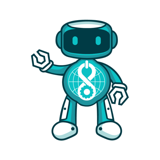
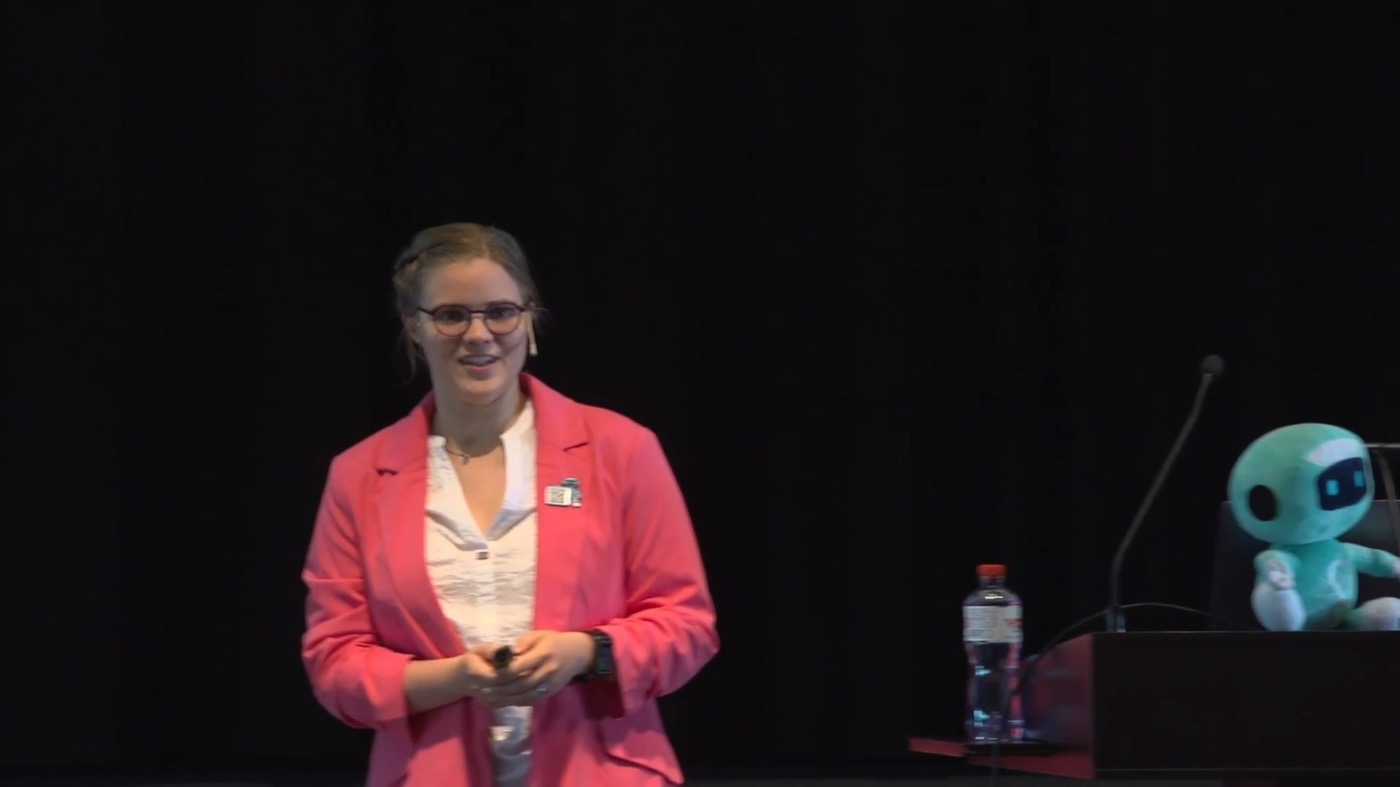
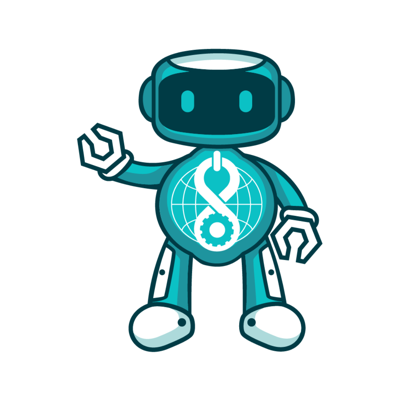
The BYTE Challenge teaches computer science to school students, and its face is a small turquoise robot called Bitsy. He came on stage with me at German UPA 2023 and sat on the lectern through the whole keynote. A curriculum does not need a mascot. The children who stayed did.
The load-bearing frame
Press the button — that is the whole argument
Questions, admissions and dissent are floors. Take the slab away and they
don't get worse — they tilt and stop.
From my own work
Onboarding at BYTE was deliberately slow: all digital, no prior knowledge required, everyone got told the story, the goals and the tools — and it took weeks, ending in a personal bond rather than a tool login. That was the slab under everything the volunteers later dared to do.
The net
It doesn't stop the fall — it decides how high people jump
Safety isn't comfort. It's permission to try the thing that might not work.
From my own work
STEM GIrls drew 367 sign-ups in its first year for the least comfortable topics there are: salary negotiation, public speaking, leaving your comfort zone, switching careers. Nobody signs up for that because the topic is easy. They signed up because the room was safe.
The Talent Ship Log
My project stages, applied to a person's relationship with their work
Nobody starts trusted. Trust is earned in laps, exactly like a product — and the same two
stages that every project model forgets are the ones people are punished for:
Pause and Exit. Name them, and parental leave stops being a gap in a CV and
becomes a stage with a documented way back.
From my own log
I've been in Pause more than once — a GI role sleeping right now, a book
project waiting for better tools, parental leave in which I wrote a book anyway. And I've done
the healthy Exit: I left the day-to-day of the BYTE Challenge and stayed as a mentor. Neither
shows up as failure on this page, because neither is.
Safety × strengths
The famous 2×2, with talent instead of pressure on the second axis
The literature pairs safety with pressure. Pair it with talent instead and
the quadrant everyone recognizes appears: brilliant people delivering while afraid, on a
countdown to burnout. Every quadrant needs a different fix — and only one of them is a
performance problem.
Where I learned it
Leading 50+ volunteers at the BYTE Challenge, where nobody was paid:
people who got roles and creative latitude thrived; people who got task lists went parked,
then quiet, then gone.
When the answer doesn’t come
Trust, as a number you can read off a clock
Every model above needs a questionnaire. This one needs a clock. Trust is visible in how
long an unanswered question survives in a channel, and it decays in a predictable order:
people ask freely, then carefully, then they guess, then they stop asking — and by then
you've lost the information, not just the mood.
Where I use it
It's how a four-week deadline got met: not better tooling, but a team
where no question stayed unanswered for long.
The 2 a.m. test.
Every product here has to pass one bar: what does it make someone feel at their weakest hour? Relieved, because someone finally answered without judging. Proud, after winning a first Pentomino duel against the machine. Seen, because a form asked one kind question instead of twelve cold ones. Deciding which feeling ships — that's the job.
From my own work
chilld exists because of a 2 a.m. question I could not answer myself.
Four talks — practical, personal, never off a template. Each also works as a panel or a hands-on workshop, in English or German.
Ship It Anyway
Lifecycle
The honest project lifecycle in the AI era. Idea and Build chase each other in circles, launch happens three times, and scale may never come — none of that is failure. Told through my own projects: the school paper that slept twelve years before becoming pentomino.club and put a 2004 world championship online, and why AI changed the physics — laps that cost six weekends now cost an evening.
A stage-honest way to tag your projects (and your ego)
Why pausing beats abandoning — and how AI made waking up cheap
The permission your audience actually came for: ship it anyway
KEYNOTE · WORKSHOP · EN/DE FOR FOUNDER PROGRAMS & INNOVATION TEAMS — YOU LEAVE WITH THE STAGE-TAGGING FRAMEWORK AND THE SKIP LIST
Safe Spaces Are Hard Infrastructure
Safety
Psychological safety in tech teams. Grounded in a personal story I tell on stage — two minutes of context, then engineering discipline: people can only think, ask and build where they feel safe, so we treat safety like infrastructure. A metric, failure modes, and fixes for Monday — built on three maps I drew myself when the existing ones turned out to have no pause in them. Not an HR poster.
The response-time metric that predicts team speed
Where leaders lose people at every project stage — applause-fishing, bottlenecking, ghosting
Designing products and teams where no question feels stupid
KEYNOTE · PANEL · EN/DE FOR ENGINEERING ORGS & LEADERSHIP OFFSITES — YOU LEAVE WITH THE MINUTES-TO-ANSWER METRIC AND THREE FAILURE MODES TO FIX ON MONDAY
From AI-Curious to Shipping
Vibecoding
AI enablement that survives the workshop high. Most organizations don't have an AI knowledge problem — they have a first-rep problem. What actually happens in a vibecoding session, what changes about engineering judgment, and how a team gets from slideware to its first shipped agentic use case.
A session format that ends with the team's first AI-built artifact
What stays human: judgment, taste, safety
Keeping momentum once the workshop glow wears off
KEYNOTE · WORKSHOP · EN/DE FOR ENTERPRISE TEAMS STARTING WITH AI — YOU LEAVE WITH YOUR TEAM'S FIRST SHIPPED AGENTIC ARTIFACT, NOT SLIDES
The Comeback
Resilience
Parenthood, goal setting and returning on your own terms. I published a book during parental leave with twins — and the point of that story is not the hustle. Comebacks aren't about doing more: they're about honest stages, systems that forgive pauses, and goals that survive a newborn phase. For returners and for the employers who want to keep them.
Goal setting that survives any life crisis
What employers get wrong about returners — and what actually helps
Why passion projects are comeback fuel, not distraction
KEYNOTE · PANEL · EN/DE FOR RETURNER PROGRAMS & EMPLOYERS — YOU LEAVE WITH GOAL SYSTEMS THAT SURVIVE A NEWBORN PHASE
Seen on stage — five places, one with video
German UPA 2023 — keynote "Teammanagement-Highlights": leading a 50-volunteer team at the BYTE Challenge. Watch the full keynote (that's the photo below — Bitsy claimed the lectern)
TechConference 2022 — "Digitalisierung ist keine Bedrohung", watch it on YouTube
Gesellschaft 4.0, Tutzing 2022 — co-initiated and spoke at the Junge GI's first conference
DigitalChangeNow — listed speaker for the digital-education movement
Book readings — hosted by Haufe, Femtec Alumnae and Google
Booking: write me with "Speaking request". Also on my stage list: digital education & women in tech — lessons from BYTE and STEM GIrls. And I mentor new parents and founders through the transition back into work — reach out if that's you.
German UPA 2023 — Bitsy claimed the lectern. Watch the keynote →Awards · press · podcasts
Recognition
Invited to meet the German Federal President — twice
I'm a computer scientist (M.Sc., TU Berlin) living in Berlin and a Tech Leader at IBM. Everything else on this page happens around that: founding chilld, co-founding the BYTE Challenge, years of volunteer work in the German Informatics Society, writing books, and giving keynotes.
The through-line is speed with honesty. I'd rather put a real, small thing in front of real people this week than a perfect thing in front of nobody next year. Every product on this page started as a personal itch — a parenting question at 2 a.m., a family board game, my own social-media backlog — and got vibecoded into the world before the doubt could catch up. AI didn't change what I build; it removed the excuse not to.
If you need a label for all of this: a human tech leader in an AI world. But I'd rather the receipts say it — the ship log above, the minutes-to-answer metric, the products that ask one kind question instead of twelve cold ones. Same instinct whether I'm architecting AI infrastructure or answering a scared new parent at 2 a.m.
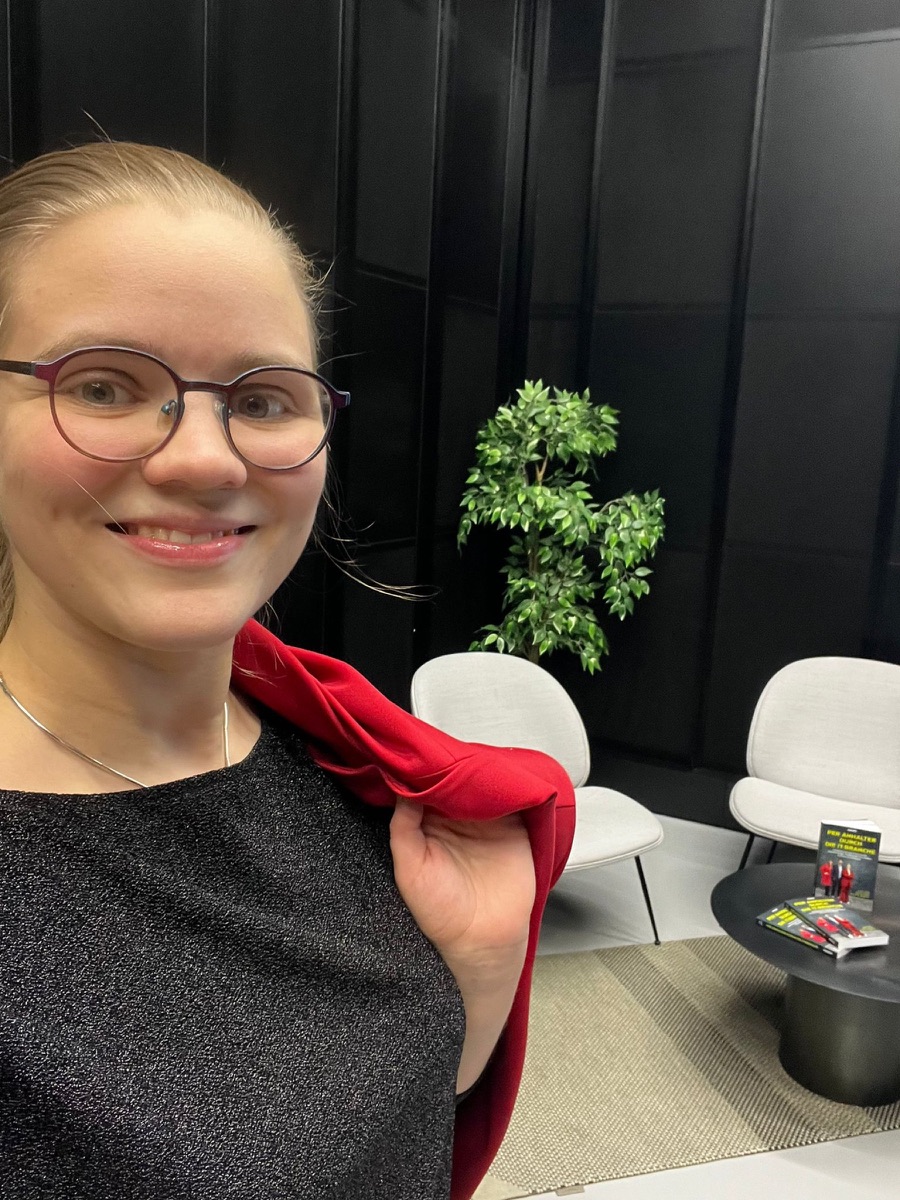
Off the keyboard: twin mom. I boulder, run half-marathons, bake when I think, and have a nerdy love for fluid mechanics. Born in Saarlouis, at home in Berlin. TEDx is on the list.
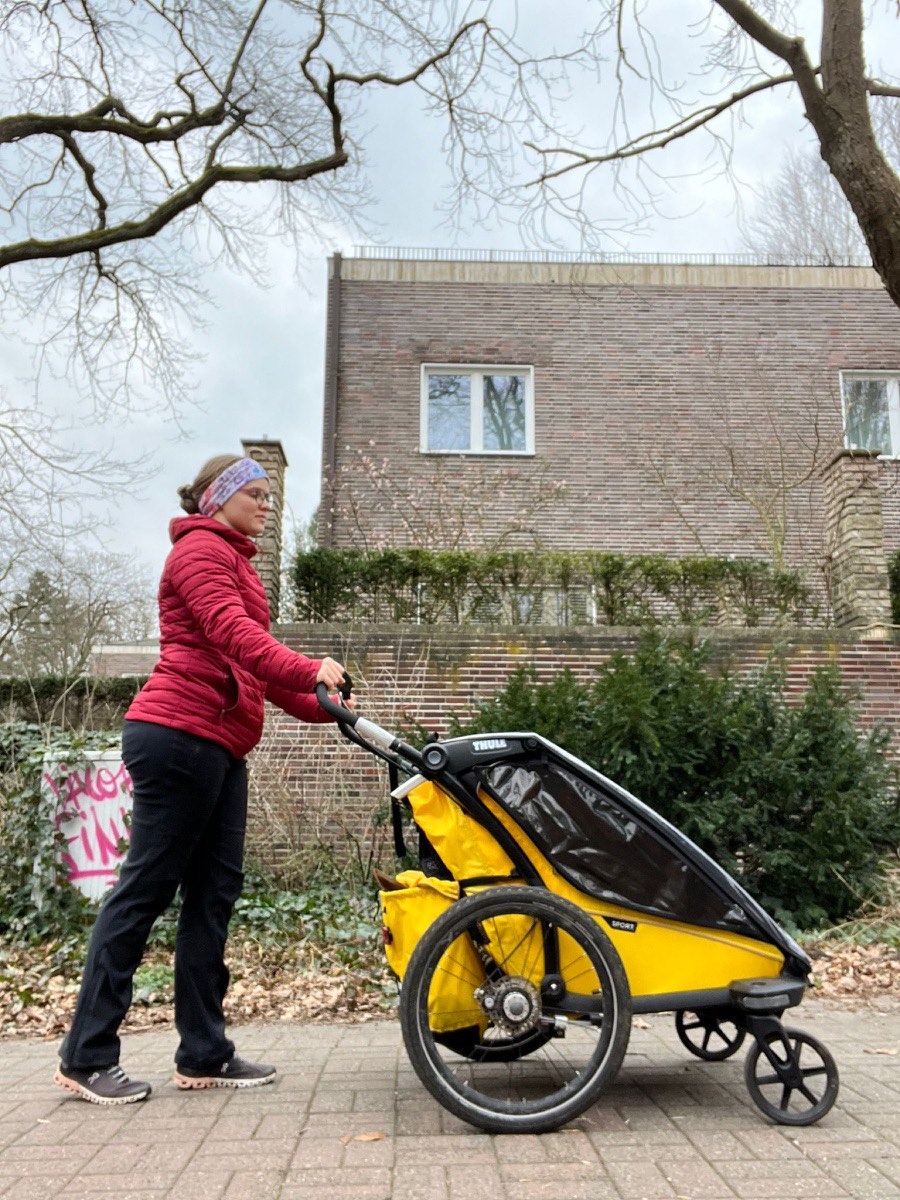
Saarlouis, the nineties. Gloves too big, starting anyway.Half-marathon training, twin edition.
Volunteer-run · Gesellschaft für Informatik & beyond
Opening tech up for everyone
Unpaid work is where I learned to lead. At the BYTE Challenge nobody had to do anything I asked — 50+ volunteers, no salary, no hierarchy, no leverage. You find out quickly that the only currencies are meaning, ownership and being answered fast. Every leadership habit I have came from there, not from an org chart. The same is true in the Gesellschaft für Informatik: you convince, or nothing happens.
Not everything I build is software. Since 2019 I've been building formats inside the Gesellschaft für Informatik and beyond that pull more people into computer science — kids, women, non-binary people, career changers. Same lifecycle, same rule: don't abandon the project.
2,000+BYTE student participants
367STEM GIrls sign-ups in year one
33+digital events initiated
€100k+sponsorship & grants raised
6 formats · swipe or use the arrows
BYTE Challenge
Exit · mentor
Co-founded in 2019 with Stefan Hildebrand: a free digital education platform with 100+ courses on computer science, digital skills and careers — fronted by Bitsy the robot. 50+ volunteers, 2,000+ students, €100k+ raised. I've since left day-to-day operations and stay close as a mentor — the healthiest exit a project can have.
The workshop series I built during my time on the GI board: role models, salary negotiation, public speaking, career switching — for women and non-binary people on their way into tech. 367 sign-ups across nine workshops in the first year alone.
The first-ever conference of the Junge GI, which I helped initiate: four days in Tutzing with the Academy for Political Education, bringing young computer scientists into dialogue with politics, business and science about generation-fair digitalization.
Spokesperson 2020–2022 and elected to the GI board (Präsidium) alongside. Founded the Berlin-Brandenburg university group and ran 33+ digital events with partners from IBM and Microsoft to McKinsey and GitHub. All handed over to the next generation — which was the point.
Structural change in the GI — statutes, tools, ways of working — through the AK Struktur I led from 2023, plus the women-in-computer-science group and its award, and European digital-skills policy at CEPIS. Currently on pause: the products above get the night hours right now, and pausing is allowed.
A movement pushing for real digital education across Germany — coding basics, digital sovereignty and media literacy for every student. I'm one of its speakers, arguing that enthusiasm for digital topics has to be sparked much earlier.
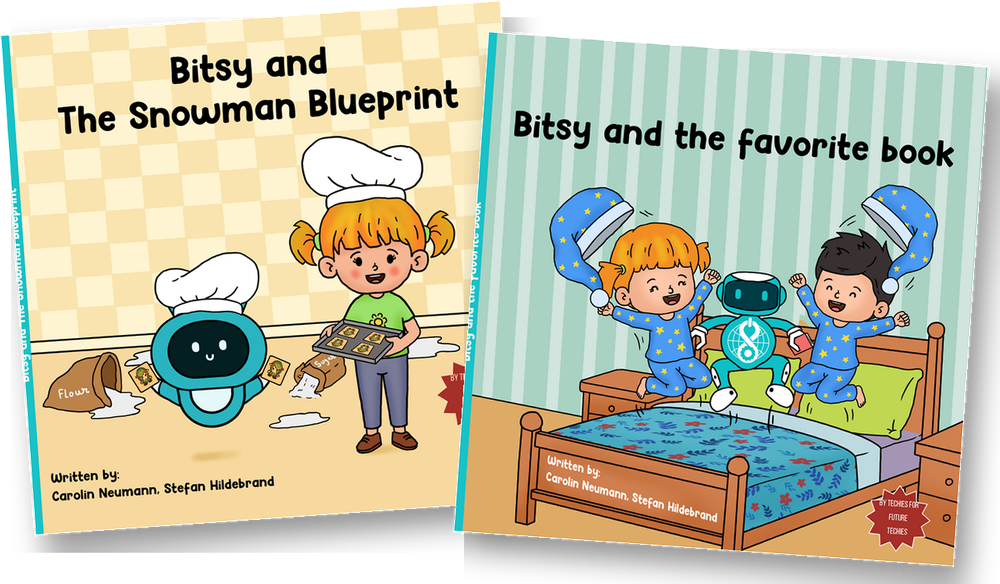
Children's stories in which Bitsy the robot solves everyday adventures — baking cookies, finding a lost cat, building a snowman — with ideas from computer science. Every book ends with a note for parents explaining the concept behind the story. Full honesty, ship-log style: the current editions aren't at my bar — they're getting rebuilt, and I'd rather you wait for the new ones.
Per Anhalter durch die IT-Branche
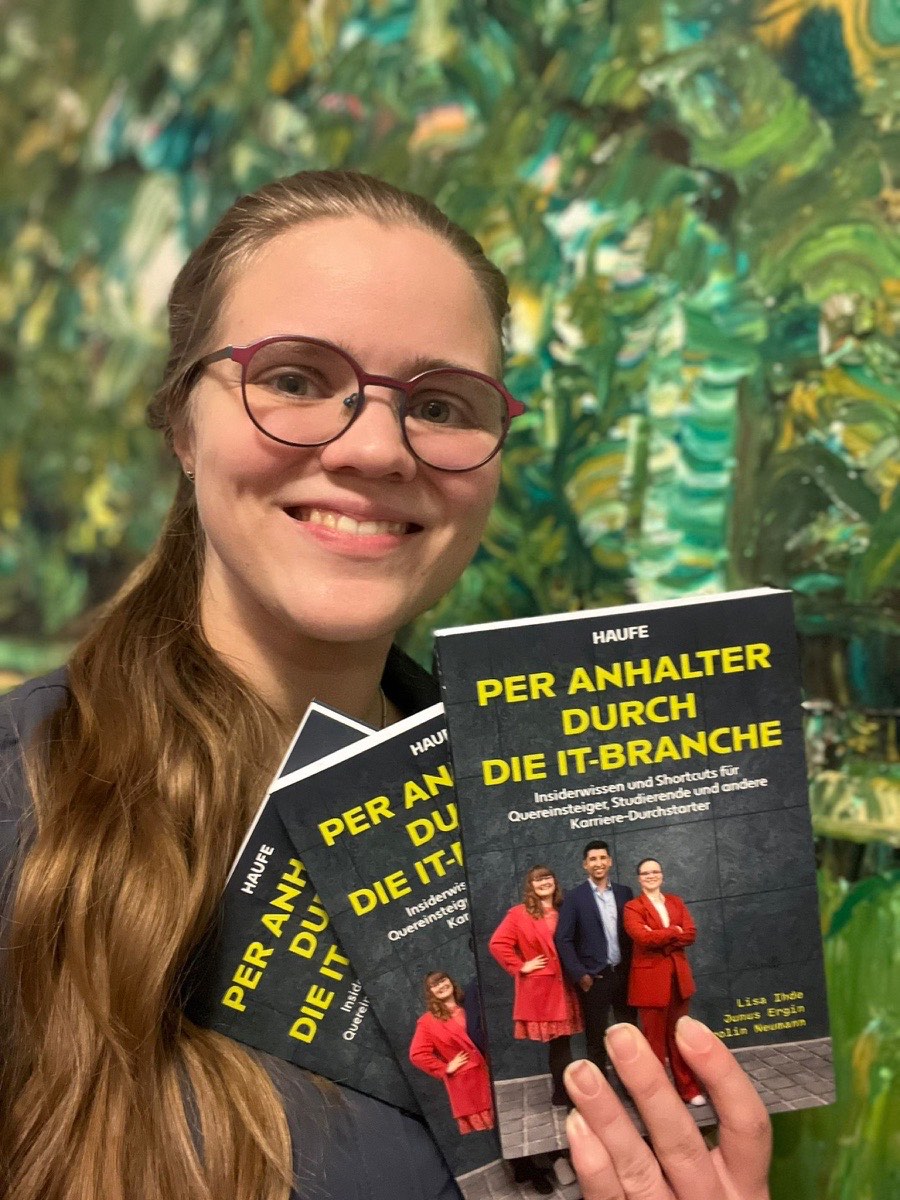
The German career guide to the IT industry, written with Lisa Ihde and Junus Ergin — and published during my parental leave with twins. Insider knowledge and shortcuts for career changers and students — and a clean-up of 24 stubborn myths about working in tech. (In German.)
The 24 myths we take apart
You had to start early — the origin story of impostor feelings
Computer science is only for maths geniuses and English pros
You need an expensive laptop — the access question nobody asks
IT jobs make you rich
Only a CS degree leads to a career
You must be able to code to work in tech
Programmers are hackers
IT isn't creative
Consultants live on the road — the one I test daily, with twins
Every computer scientist has a side hustle — guilty, see above
Teaching in tech is dry and theoretical
All developers do the same thing
Senior means many years of experience
Cloud computing is a passing trend
Anyone can code now, especially with AI — the chapter that aged into the present
Big Tech jobs are out of reach
Developers don't have to keep learning
New Work is less stressful
Silicon Valley is the perfect place to start
Computer scientists are introverted and socially hopeless
Tech influencing as a plan B?
There are no women in IT
Twenty-four chapters, twenty-two listed here — the two missing ones are a
reading incentive. Written with Lisa Ihde and Junus Ergin, Haufe 2025.